how the tiktok algorithm actually works in 2026
TikTok shows every new post to a small test batch, measures completion, saves, shares and comments, and expands distribution in rounds if the signals are strong. Follower count doesn't drive reach — each video earns its own audience through that loop.
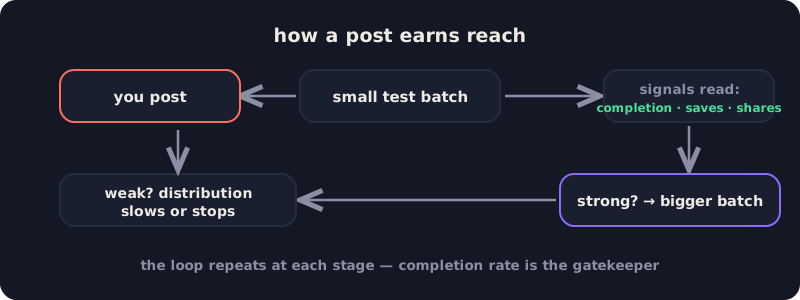
The algorithm feels random because one video dies at 300 views and its twin hits 47,000. It isn't random — it's a loop with readable rules.
The loop: test, measure, expand
Every post starts roughly equal: a small batch of viewers, picked for likely interest. The platform then reads behavior — did they finish it? rewatch? save? share? comment? — and decides whether the next, bigger batch is worth spending attention on. Strong signals buy another round; weak ones end the run.
This is why follower count matters less on TikTok than anywhere else: your followers aren't even guaranteed the first batch. Each video re-auditions. It's also why one video in ten can explode from a small account — the loop doesn't care who you are, it cares how the batch behaved.
Completion is the gatekeeper signal
Of all the signals, completion rate does the heaviest lifting: what share of the test batch watched to the end. A video most of the batch finishes gets pushed; one they abandon early gets buried, regardless of how good the ending was.
The practical consequences: shorter videos complete more easily (padding is expensive), the opening seconds carry most of the risk (that's where abandonment concentrates), and loops — endings that flow back into the beginning — quietly inflate watch time. Saves and shares are the premium signals layered on top: they say 'this had lasting value,' which is worth more than a like.
What changed by 2026: search weight
The biggest structural shift: TikTok increasingly behaves like a search engine, and the algorithm reads what your video is ABOUT — the spoken words, the on-screen text, the caption — to serve it against search intent, not just the feed. Content that clearly answers something people search for earns a second discovery surface that keeps paying long after the feed stopped testing it.
That rewards a different discipline than chasing trends: pick topics people actually search, say the query out loud in the video, write it in the caption. Our TikTok SEO guide covers the mechanics.
Working with the loop instead of against it
Everything that 'hacks' the algorithm reduces to feeding the loop honestly: open with the strongest second you have, cut everything that doesn't earn the next second, keep a steady posting rhythm so the platform keeps testing you, and study your own outliers — the posts that expanded — for what their openings shared.
And study others': when a video in your niche clearly won the loop, pull its numbers into an engagement calculator and its script through a transcriber, and look at the structure rather than the surface. Formats are learnable; luck isn't.
step by step
faq
Does follower count affect reach?
Far less than on other platforms — each video is tested on its own signals. Followers raise your floor slightly, not your ceiling.
What's the most important ranking signal?
Completion rate — the share of viewers who finish. Saves and shares are the premium signals above it.
Does posting time matter?
Less than consistency does. A steady 3–5 posts a week outperforms perfectly-timed bursts.
Why did one video blow up and the next flop?
Each ran its own test. Compare their first three seconds — that's almost always where the difference lives.