tiktok seo — ranking when tiktok is the search engine
TikTok search indexes your spoken audio, on-screen text, caption, hashtags and profile — and ranks results by how well viewers respond. Pick a searchable phrase, say it out loud early, show it on screen, front-load it in the caption, and let retention do the rest.
A huge share of younger users now search TikTok before Google — for routines, reviews, how-tos, products. If your videos only perform in the feed, you're leaving the compounding half of the platform on the table.
Search traffic is different traffic
Feed views are rented: the algorithm tests you, the moment passes. Search views compound: someone typed a question, chose your video, and that video keeps surfacing for that query for months. Search viewers also arrive with intent — they're closer to following, saving, or buying than a feed scroller ever is.
For anyone selling — TikTok Shop especially — this is the difference between traffic and demand. A video ranking for a product-intent search works like a landing page that TikTok hosts for free.
What actually gets indexed
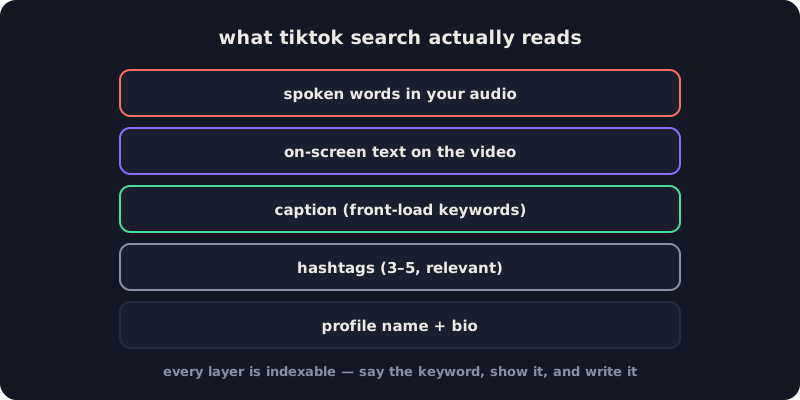
TikTok's search reads more layers than most creators realize: the words you SPEAK (transcribed automatically), the text you put ON the video, the caption, your hashtags, and your profile name and bio. All of it is signal.
The practical playbook: open the video by saying the target phrase naturally ('here's my morning skincare routine for oily skin'), put the same phrase in on-screen text, and front-load it in the caption's first line — the part visible before the cut-off. Then 3–5 genuinely relevant hashtags, not fifteen generic ones. Every layer repeating the same clear topic beats any single layer shouting.
Finding phrases worth ranking for
The best keyword tool is TikTok's own search bar: type the start of your topic and read the autocomplete — those suggestions are real queries, ranked by real volume. Then search your target phrase and study the top results: what do their captions and openings share? Where's the gap you can fill better?
Go long-tail first. 'Skincare' is unwinnable; 'niacinamide routine for beginners' is a real fight you can enter. One winnable phrase per video, executed across every layer, beats scattering keywords everywhere.
Retention still decides the ranking
Keywords get you INTO the results; behavior decides where you rank in them. A video that matches the query and holds viewers outranks one that merely repeats the words — TikTok is ranking satisfaction, not text. So the search game and the feed game converge on the same craft: answer the query fast, hold attention, end with a reason to save.
That's also the honest reason keyword stuffing fails: you can trick the index into showing you once, but you can't trick a viewer into finishing.
step by step
faq
Is TikTok really a search engine now?
Functionally yes — a large share of younger users search TikTok first for how-tos, reviews and recommendations, and the platform ranks video results like a search engine.
Do spoken words really get indexed?
Yes — TikTok transcribes audio and uses it as ranking signal. Saying the target phrase clearly matters.
How many hashtags should I use?
3–5 relevant ones beat a wall of generic tags. Hashtags are context, not magic.
Does TikTok SEO help Google rankings too?
Increasingly — TikTok videos surface in Google results, so one optimized video can rank in both ecosystems.