tiktok hooks — winning the first three seconds
Most viewers decide in under three seconds. A working hook does three jobs fast: interrupt the scroll (0–1s), promise something specific (1–2s), and start delivering it (2–3s). The reliable hook types — open loops, bold claims, direct address, pattern breaks — all fit that anatomy.
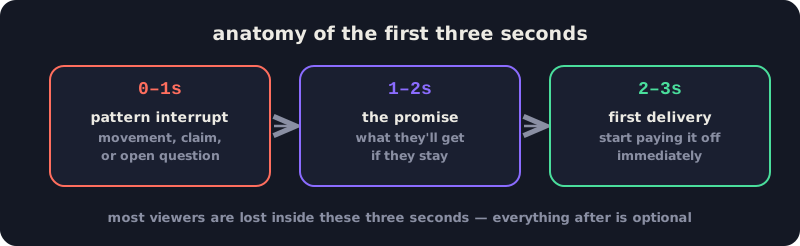
Creators polish minute two of videos that lose the audience in second one. The first three seconds aren't part of the video — for most viewers, they ARE the video.
The three jobs of the first three seconds
Second one has one job: stop the thumb. Movement, an unexpected frame, a claim that can't be ignored, a question mid-thought. Second two makes the promise: what, specifically, does staying get me? Second three starts paying it off — not 'coming up later,' but the first piece of the answer, now.
Videos that do all three keep their test batch; videos that spend those seconds on intros, logos, or 'hey guys, welcome back' hand the algorithm its exit data before anything happened.
Hook types that keep working
The reliable families, each transferable to any niche: the open loop ('nobody talks about the third one'), the bold claim ('this replaced my entire routine'), direct address ('if your skin does this, watch'), the pattern break (starting mid-action, mid-sentence, mid-result), the enemy hook ('everything you've heard about X is backwards'), and the result-first hook (show the after, then rewind).
None of these are magic words — they're structures. The specificity is what carries them: 'this $9 product' beats 'this product,' 'in four days' beats 'quickly.' Vague hooks read as ads; specific ones read as information.
Steal structure, not words
The fastest hook education is studying what already won in YOUR niche. Find the outliers — the videos that clearly beat their creator's average — and transcribe their openings word for word. (Pulling a video's speech to text takes a minute with a transcriber.) Then look past the words to the move: what job did second one do? Where was the promise? When did delivery start?
Build a swipe file of ten transcribed openings from your niche and the patterns become impossible to miss — and legitimately yours to reuse, because structure isn't plagiarism.
Hooks aren't only spoken
On slideshows and captioned videos, the FIRST FRAME is the hook: the text on slide one does the interrupting and promising before any audio matters. The same anatomy applies — specific claim, visible instantly, positioned where the UI can't cover it (run it through a safe-zone check; a hook under the caption bar is a hook nobody read).
And on any video: assume sound-off. If the hook only exists in audio, it doesn't exist for the muted majority — put it on screen too.
step by step
faq
How long should a TikTok hook be?
The work happens in the first three seconds: interrupt, promise, and begin delivering. Everything after is retention, not hook.
What's the best hook type?
Whichever fits the content honestly — open loops, bold claims, direct address, and result-first all work when the promise is specific and kept.
Do hooks work on slideshows?
Yes — slide one's text IS the hook. Make it a specific claim and keep it out of the UI-covered zones.
Is copying someone's hook okay?
Copy the structure, never the sentences. Formats are shared property; scripts aren't.